About the Author
 Professor, Faculty of Philosophy &
Director, Future of Humanity Institute &
University of Oxford
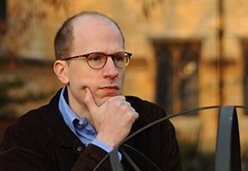
Nick Bostrom is a Professor at Oxford University, where he heads the Future of Humanity Institute as its founding director. He is the author of more than 200 publications, including Anthropic Bias (2002), Global Catastrophic Risks (2008), Human Enhancement (2009), and Superintelligence: Paths, Dangers, Strategies (2014), which became a New York Times bestseller and sparked a global conversation about the future of AI. His academic work has been translated into more than 30 languages, and he is the world’s most cited philosopher aged 50 or under. He is a repeat main-stage TED speaker and he has been interviewed more than 1,000 times by various media. He has been on Foreign Policy’s Top 100 Global Thinkers list twice and was included in Prospect’s World Thinkers list, the youngest person in the top 15. Some of his recent work has focused on the ethics of digital minds. He has a book in the works on a topic yet to be disclosed.
The Anthropic Principle
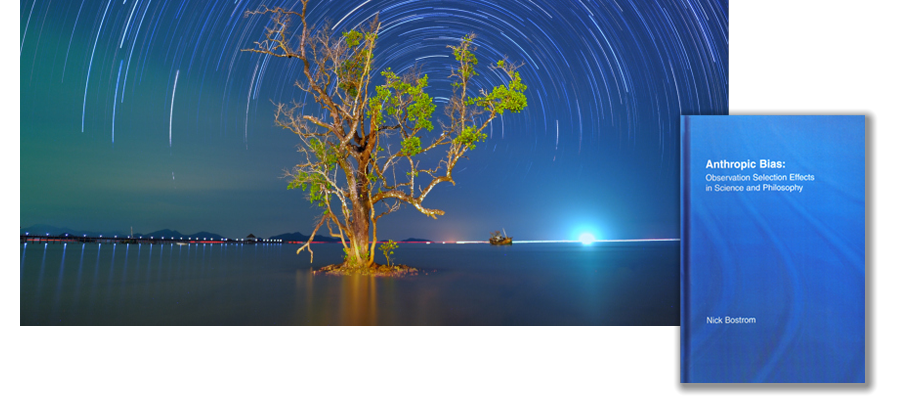
Was the Universe made for us? It appears that there is a set of fundamental physical constants that are such that had they been very slightly different, the universe would have been void of intelligent life. It's as if we're balancing on a knife’s edge. Some philosophers and physicists take the 'fine-tuning' of these constants to be an explanandum that cries out for an explanans, but is this the right way to think?
The data we collect about the Universe is filtered not only by our instruments' limitations, but also by the precondition that somebody be there to “have” the data yielded by the instruments (and to build the instruments in the first place). This precondition causes observation selection effects - biases in our data that may call into question how we interpret evidence that the Universe is fine-tuned at all.